Here's what most people don't know about Sir Christopher Wren: he wasn't primarily an architect.
He was a mathematician, astronomer, and founding member of the Royal Society—one of the greatest scientific minds of the 17th century. Architecture was actually his side project, started when he was already 30 years old and established as Oxford's Professor of Astronomy.
So when Wren designed 52 churches and St. Paul's Cathedral after the Great Fire, he wasn't just creating beautiful buildings. He was encoding mathematical principles, astronomical alignments, and geometric relationships that most visitors would never consciously notice.
The question at the heart of The Monument is: could he have encoded something more deliberate? Something hidden?
To answer that, we need to understand how sophisticated Wren's mathematical architecture actually was.
The Scientist Who Became London's Architect
Before the Great Fire, Christopher Wren had already:
- Solved complex problems in geometry and calculus
- Built astronomical instruments
- Conducted experiments on the moon's movements
- Calculated the length of the arc of a cycloid
- Served as President of the Royal Society
- Designed the Sheldonian Theatre in Oxford using innovative structural mathematics
When the Fire destroyed medieval London in 1666, Wren saw an opportunity to rebuild the city according to rational, mathematical principles. He submitted a radical plan: tear down the chaotic medieval street pattern and replace it with a grid system based on geometric principles.
That plan was rejected as too expensive and disruptive. But Wren got the commission to rebuild St. Paul's Cathedral and 51 parish churches—giving him unprecedented opportunity to encode mathematical ideas into London's architecture.
And encode them he did.
St. Paul's Cathedral: Mathematics in Stone
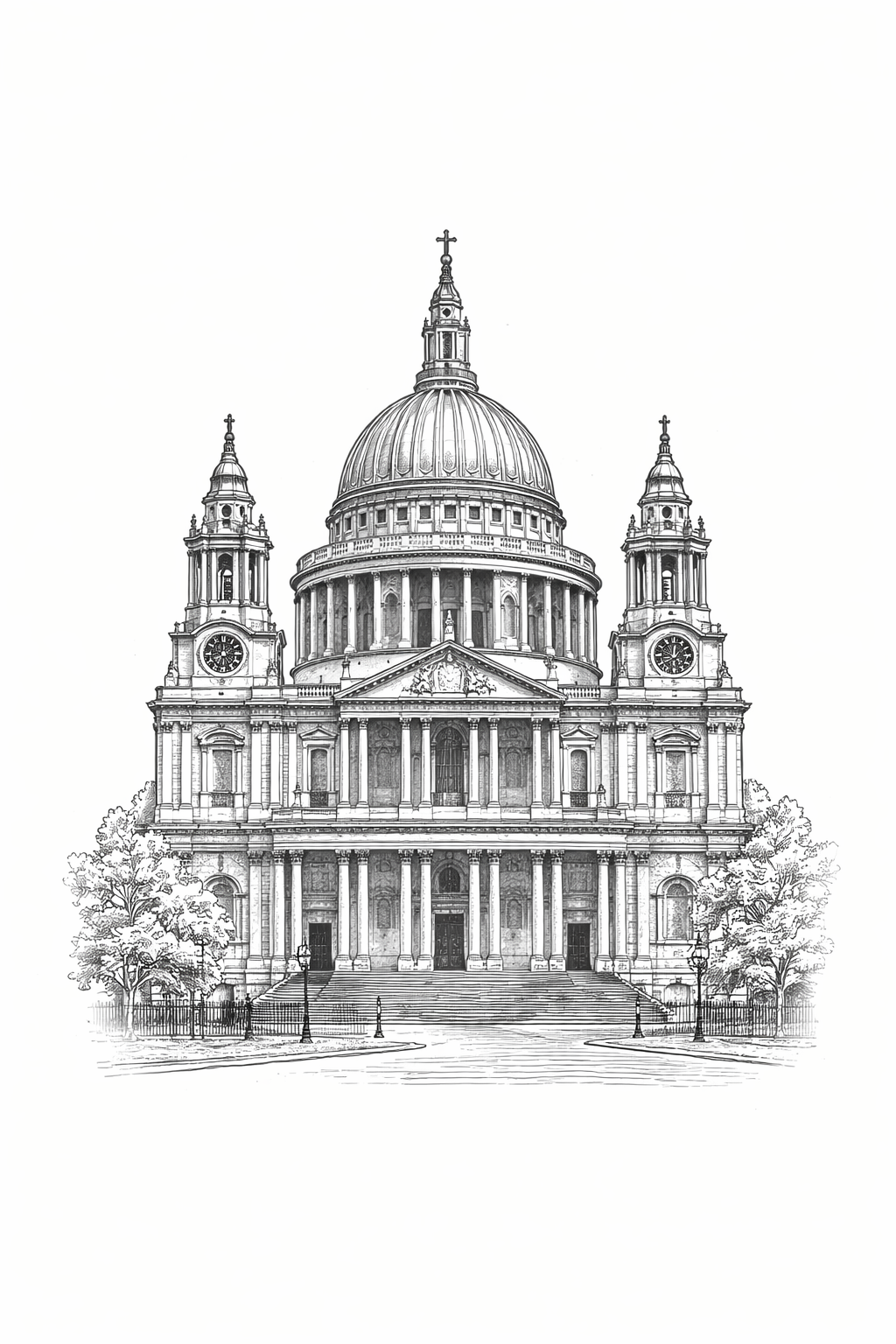
St. Paul's dome is one of the most recognizable structures in the world. What most people don't realize is that it's three domes in one: the visible outer dome, the inner dome you see from inside, and a hidden structural cone between them that bears the weight.
This triple-dome design was Wren's mathematical innovation. The visible dome has the proportions that look right from outside. The inner dome has the proportions that work from inside. The hidden cone solves the engineering problem—you can't see it, but without it, the whole structure would collapse.
Wren built a hidden structure into St. Paul's that's essential to the building but invisible to observers.
Sound familiar?
The dome's dimensions follow precise mathematical ratios: the diameter relates to the height according to principles Wren calculated from his astronomical work. The gallery positions correspond to musical harmonics—another mathematical system Wren studied extensively.
These aren't decorative choices. They're encoded mathematics.
Sacred Geometry and Hidden Meanings
Medieval and Renaissance architects routinely encoded religious and philosophical meanings into their buildings through geometry. This wasn't secret—it was expected.
The vesica piscis (two overlapping circles) symbolized the intersection of heaven and earth. The golden ratio (1:1.618) represented divine proportion. Specific geometric patterns referenced Biblical passages or theological concepts.
Wren, trained in both theology and mathematics, would have been intimately familiar with these traditions.
But he also lived in an age of scientific revolution. While older architects encoded religious symbolism, Wren was discovering actual mathematical laws of the universe: planetary motion, gravitational relationships, optical principles.
What if he applied that same encoding tradition to documenting something more concrete than symbolism?
What if he used mathematical precision not to hint at divine truths, but to preserve evidence of human conspiracy?
The Language of Astronomical Alignment
Several of Wren's churches are oriented to astronomical alignments that go beyond the traditional east-west axis of Christian churches.
St. Mary-le-Bow's spire aligns with specific sightlines to astronomical events. Christ Church Newgate's positioning relates to solar angles. Multiple churches incorporate geometric relationships to each other—distances and angles that suggest deliberate spatial coordination.
Some historians attribute this to Wren's scientific interests—he couldn't help but incorporate astronomical principles even in religious architecture.
But here's the thing: mathematical precision requires measurement and calculation. If Wren positioned churches to align with astronomical coordinates, he was creating a system that could be verified and measured by anyone with the right tools.
That's the opposite of symbolism. That's documentation.
In The Monument, when Olivia Hart discovers that Wren's sealed chambers align not just with property boundaries but with astronomical coordinates, she's finding evidence that can be mathematically proven. Not interpreted—proven.
Why Mathematical Encoding is Genius
Verbal testimony can be denied. Written documents can be destroyed or forged. Witnesses can be silenced. Records can be altered.
But mathematics can't lie.
If Wren positioned 15 chambers in 15 churches according to a mathematical pattern, and that pattern corresponds to property boundaries, astronomical coordinates, and geometric relationships that exceed any practical architectural need, then the pattern proves intent.
You can't accidentally create mathematical precision across 15 locations over 40 years. That requires calculation, measurement, and deliberate design.
That's why architectural encoding is so powerful. The evidence is literally built into London. To destroy it, you'd have to demolish the churches—protected Grade I listed buildings, some of Britain's most important heritage sites.
The evidence is permanent. The evidence is measurable. The evidence is undeniable.
If Wren wanted to preserve proof that would survive centuries, encoding it architecturally is perhaps the only method that would actually work.
The Real Examples Support the Fiction
We know Wren encoded mathematical principles in his buildings—that's documented fact.
We know he used precise positioning and astronomical alignments—measurable truth.
We know he created hidden structural elements (the triple dome) that are essential but invisible—verified engineering.
We know sacred geometry and architectural encoding were common practices in his time—historical record.
We know he was brilliant enough to calculate complex geometric relationships—established through his scientific work.
The premise of The Monument—that Wren could have taken these established practices and applied them to hiding evidence—isn't a stretch. It's the logical extension of what he demonstrably did do.
The only difference between the fiction and the fact is intent.
Did Wren encode astronomical alignments because he found mathematics beautiful, or because he was documenting something specific?
Did he position churches with geometric precision for aesthetic reasons, or to mark property boundaries acquired through conspiracy?
Did he create hidden voids for structural purposes, or to preserve evidence?
When Architecture Becomes Testimony
In my novel, Wren's architecture becomes testimony in the most literal sense. Mathematical precision that proves deliberate design. Geometric relationships that document property theft. Astronomical alignments that cannot be coincidental.
The genius isn't hiding evidence in one location (which could be destroyed). It's encoding the proof across an entire city in a pattern that becomes undeniable once you recognize it.
And the brilliant cruelty of it? The conspirators funded the construction. They paid Wren to rebuild London. They commissioned the very churches that documented their crimes.
Because they saw beautiful architecture. They didn't see the encoded proof.
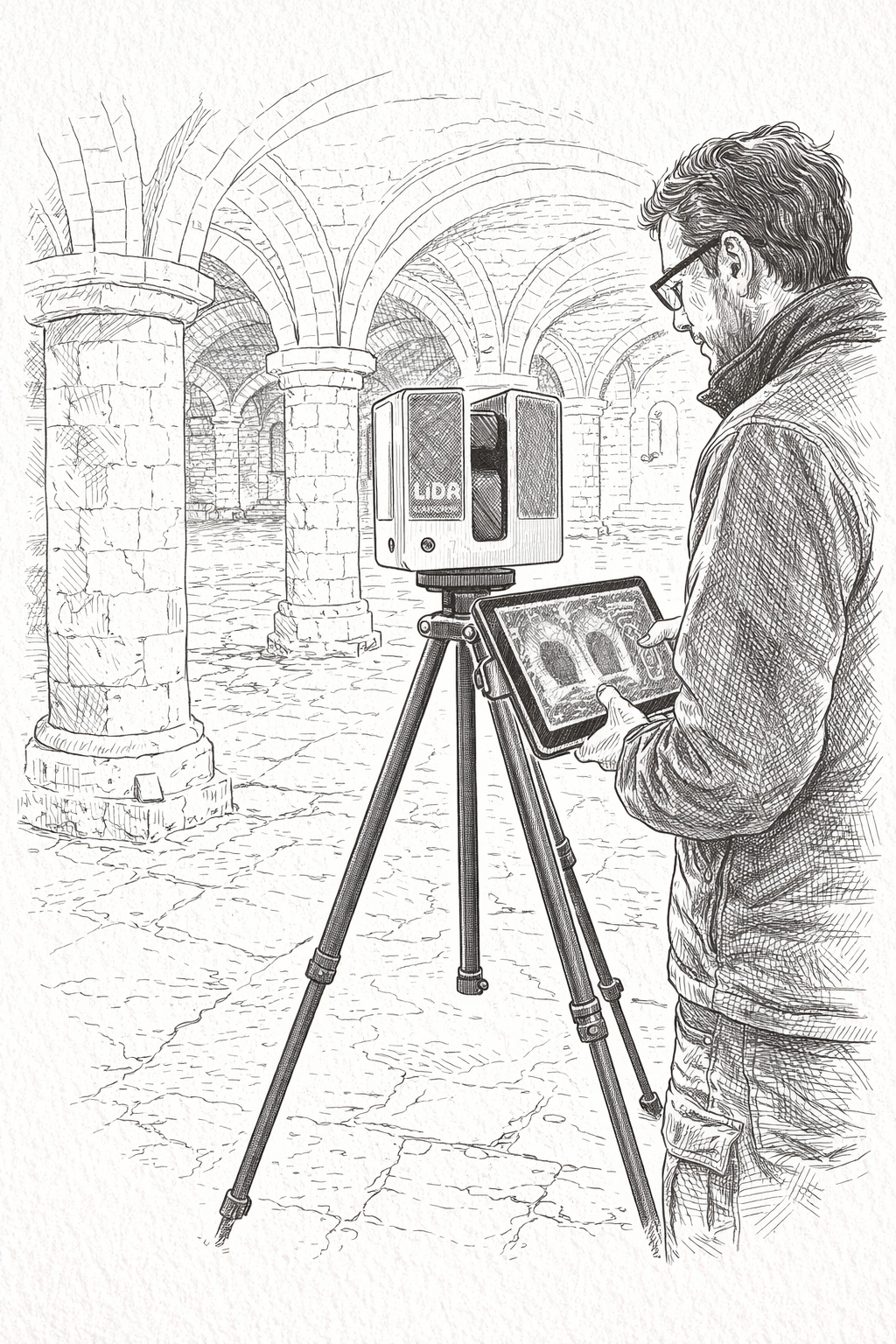
Not until someone with modern scanning technology and the right hypothesis came looking.
The Math Doesn't Lie
Here's what makes The Monument work as a premise: mathematics is verifiable.
When Olivia Hart maps 15 sealed chambers and finds they're positioned with precision that exceeds one-in-a-billion probability of occurring randomly, that's not interpretation. That's mathematical proof of intent.
When those chambers align with astronomical coordinates calculated in the 1670s, that's not symbolism. That's documentation.
When the pattern reveals property boundaries established after the Fire, that's not coincidence. That's evidence.
Wren the mathematician would have understood this. Mathematical proof survives when everything else fails.
If he wanted to preserve evidence for centuries, encoding it in the permanent architecture of London—in a form that could be measured, verified, and proven through mathematics—was perhaps the only way that would actually work.
The Fiction Built on Fact
The Monument is fiction. The conspiracy is invented. The sealed chambers are imaginary.
But the premise—that Wren could have done this—is built on everything he actually accomplished:
His mathematical genius: proven.
His astronomical knowledge: documented.
His architectural encoding practices: verified.
His creation of hidden structural elements: established fact.
His ability to calculate precise positioning: beyond question.
The only fictional element is that he used these verified abilities to document a conspiracy rather than simply to create beautiful architecture.
And honestly? Given his brilliance, I find it harder to believe he wouldn't have thought of it.
0 Comments