In November 2017, scientists announced they'd found a hidden chamber in the Great Pyramid of Giza.
Not a small cavity. A 100-foot-long void above the Grand Gallery—one of the largest spaces inside the pyramid. It had been there for 4,500 years. Millions of tourists had walked beneath it. Archaeologists had studied the pyramid for over a century.
Nobody knew it existed until muon tomography—a form of cosmic ray imaging—revealed it.
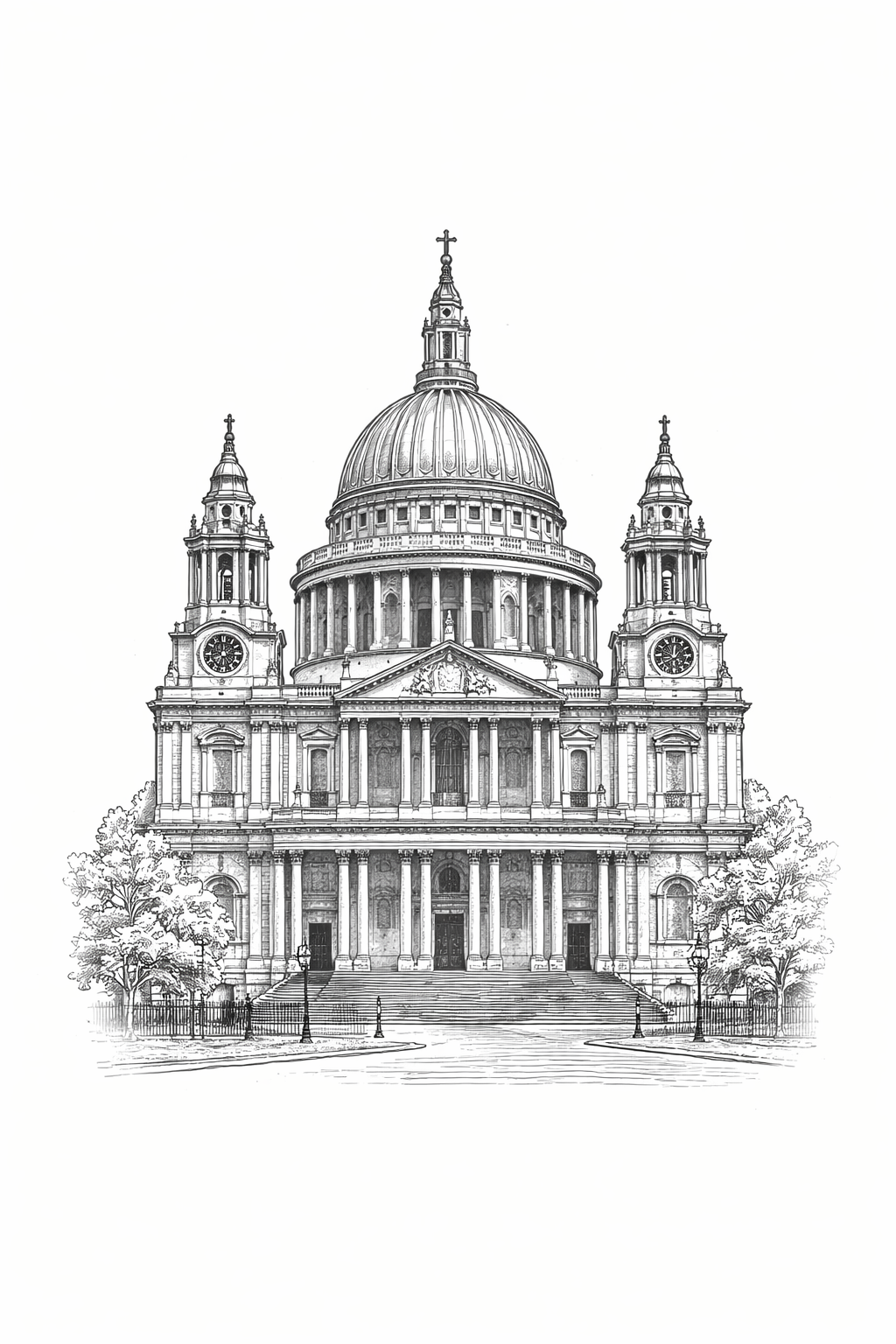
That discovery changed how I think about The Monument. If we can find secret chambers in the most-studied structure on Earth, why wouldn't Christopher Wren's churches have similar surprises?
The Technology Revolution in Archaeology
For most of history, archaeology meant digging. You made hypotheses about where to excavate, then you dug carefully and hoped you were right. Destructive, expensive, time-consuming.
Now we have technology that lets us see underground without moving a single stone:
Ground-Penetrating Radar (GPR): Sends electromagnetic pulses into the ground and measures reflections. Different materials—stone, brick, air, soil—reflect differently. A sealed chamber shows up as a distinct void pattern.
LiDAR (Light Detection and Ranging): Laser scanning that creates three-dimensional maps with millimetre precision. Can penetrate forest canopy to reveal hidden structures, or map building interiors in extraordinary detail.
Muon Tomography: Detects cosmic ray particles passing through structures. Dense material stops more particles. Voids let more through. That's how they found the Great Pyramid chamber—and it works without disturbing anything.
Thermal Imaging: Identifies temperature differences in walls. Hidden chambers create different heat signatures than solid stone.
These aren't experimental. They're standard archaeological tools, used worldwide on projects from Mayan cities to medieval castles.
And they're exactly what Olivia Hart uses in The Monument.
What We've Discovered Recently
The Great Pyramid chamber wasn't a one-off. Modern technology is revealing hidden history constantly:
Angkor Wat, Cambodia (2015): LiDAR penetrated jungle canopy and revealed an entire lost city—temples, roads, water systems. The visible temples were just 1% of the actual settlement.
Stonehenge, UK (2014): GPR discovered 17 previously unknown ritual monuments buried around Stonehenge, completely changing our understanding of the site.
Crossrail, London (2009-2019): Construction for the Elizabeth Line uncovered over 10,000 skeletons, Roman roads, Tudor bowling balls, and medieval plague pits. Some were predicted by archaeology. Others were complete surprises.
Rosslyn Chapel, Scotland (2000s): GPR revealed sealed vaults beneath the chapel floor, confirming centuries of speculation. They found buried knights from the 1400s.
Canterbury Cathedral (2023): Laser scanning during restoration work identified a previously unknown medieval crypt. Hidden behind a wall. Sealed for centuries.
The pattern is clear: even in buildings we've studied exhaustively, modern technology keeps finding new secrets.
Why This Matters for Wren's Churches
Wren's churches are Grade I listed buildings—protected heritage sites. You can't excavate randomly. You need:
- Research justification
- Heritage permissions
- Academic oversight
- Substantial funding
But GPR is non-invasive. If you have a credible hypothesis and proper permissions, you can scan without disturbing anything.
In The Monument, Thomas Hart develops his hypothesis through archival research: property acquisitions after the Fire correlate suspiciously with church locations. That hypothesis justifies GPR surveys. The surveys reveal sealed voids.
This isn't fantasy. It's exactly how modern archaeology works:
- Archival research generates hypothesis
- Non-invasive scanning tests hypothesis
- Results either confirm or contradict
When Olivia Hart finds sealed 8x8x8-foot chambers positioned with mathematical precision across 15 churches, she's using methods that found the Great Pyramid void, revealed Angkor Wat's lost city, and discovered Canterbury's hidden crypt.
The Equipment is Real
The Z-400 laser scanner and GPR-3000 ground-penetrating radar that Olivia uses in the novel? Those are fictional model numbers, but the technology is standard in structural engineering and heritage conservation.
I researched actual equipment specifications. Range: 100+ metres. Precision: millimetre-level accuracy. Point cloud density: millions of measurements. Processing time: hours to days depending on complexity.
A structural engineer doing heritage work would have access to this equipment professionally. The surveys Olivia conducts are realistic in scope, duration, and technical capability.
The only fictional element is what she finds—not how she finds it.
What Technology Can't Do
Here's what's important: technology reveals. It doesn't interpret.
GPR shows a void. It doesn't tell you what's inside, why it exists, or what it means. A sealed chamber could contain:
- Structural necessity (load-bearing architecture)
- Medieval burials (common in church crypts)
- Builder's materials left behind
- Or evidence of conspiracy
You need human analysis to interpret the data. That's where Olivia's expertise matters. She recognizes that 15 identical voids, positioned with impossible precision, aligned astronomically, marking property boundaries—that's not structural accident. That's deliberate design.
The technology provides data. The engineer provides meaning.
Why We Keep Finding Things
The honest answer to "Have we found everything?" is: definitely not.
Buildings evolve. Renovations seal old spaces. Fires destroy records. Bombing creates rubble that buries original features. Subsequent rebuilding covers evidence. Over centuries, knowledge gets lost.
Wren's churches have been:
- Damaged in the Great Fire (obviously)
- Restored multiple times (1700s-1800s)
- Bombed in WWII (extensive damage to many)
- Rebuilt post-war (1950s-1960s)
- Renovated repeatedly (ongoing)
Each intervention potentially sealed spaces, altered features, or obscured original construction. Victorian restorers cared about visible architecture. WWII rebuilding focused on getting churches functional. Nobody was looking for sealed foundation chambers.
Until someone had reason to look.
The Time Factor
GPR became mainstream in archaeology in the 1990s. High-precision laser scanning emerged in the 2000s. These technologies are only 20-30 years old.
Before them, finding hidden chambers required:
- Physical evidence (cracks, sounds, anomalies)
- Invasive investigation (drilling, excavation)
- Luck (accidental discoveries during construction)
Now we can look without disturbing. Map without drilling. Find without destroying.
The tools to discover Wren's hypothetical chambers literally didn't exist until recently.
That's why the premise works. Not that the chambers stayed hidden—but that only modern technology could find them.
The Fiction Built on Fact
The Monument doesn't claim Wren's churches actually contain hidden chambers. It asks: what if someone looked, using modern technology, and found them?
That "what if" is built on:
- Real technology (GPR, laser scanning) ✓
- Real discoveries (Great Pyramid, Crossrail, Rosslyn Chapel) ✓
- Real archaeological methods (hypothesis → scanning → analysis) ✓
- Real professional access (structural engineers do this work) ✓
- Real possibility (Grade I buildings haven't been comprehensively scanned) ✓
The only fictional element is the conspiracy. Everything else—the technology, the methods, the possibility—is factual.
What's Still Waiting to Be Found?
Here's the fascinating thing: we don't know what else is hidden in London.
Crossrail found 10,000 skeletons nobody predicted. Canterbury found a sealed crypt in 2023. Every major construction project uncovers surprises.
London is built on 2,000 years of continuous occupation. Every era buried the previous era's infrastructure. Roman, Saxon, medieval, Tudor, Georgian, Victorian, modern—all layered on top of each other.
How many sealed chambers exist? How many forgotten crypts? How many lost medieval tunnels?
We genuinely don't know.
And that uncertainty—that space between what we've found and what still waits to be discovered—is where historical fiction lives.
Maybe Wren's churches don't contain hidden chambers documenting conspiracy.
But given what modern technology keeps revealing in buildings we thought we knew...
Maybe they do.
0 Comments