When I tell people the premise of my thriller The Monument—that Sir Christopher Wren encoded secrets in sealed chambers beneath his London churches—the first question is always the same: "Could that actually work?"
The answer might surprise you.
Not only could it work—it's exactly the kind of discovery that's happening in archaeology right now.
We're Still Finding Hidden Chambers in Famous Buildings
In 2017, scientists discovered a previously unknown chamber in the Great Pyramid of Giza using muon tomography—essentially cosmic ray imaging. The pyramid has been studied for over 4,500 years, yet we're still finding rooms we didn't know existed.
In 2020, during London's Crossrail construction, workers uncovered a network of Roman burial chambers and medieval crypts that appeared on no modern maps. Some were sealed in the 1660s during the Great Plague and simply forgotten.
Just last year, ground-penetrating radar revealed a hidden Tudor tunnel network beneath central London, connecting buildings that historians had studied for centuries.
The pattern is clear: even in structures we think we know intimately, modern technology keeps revealing secrets.
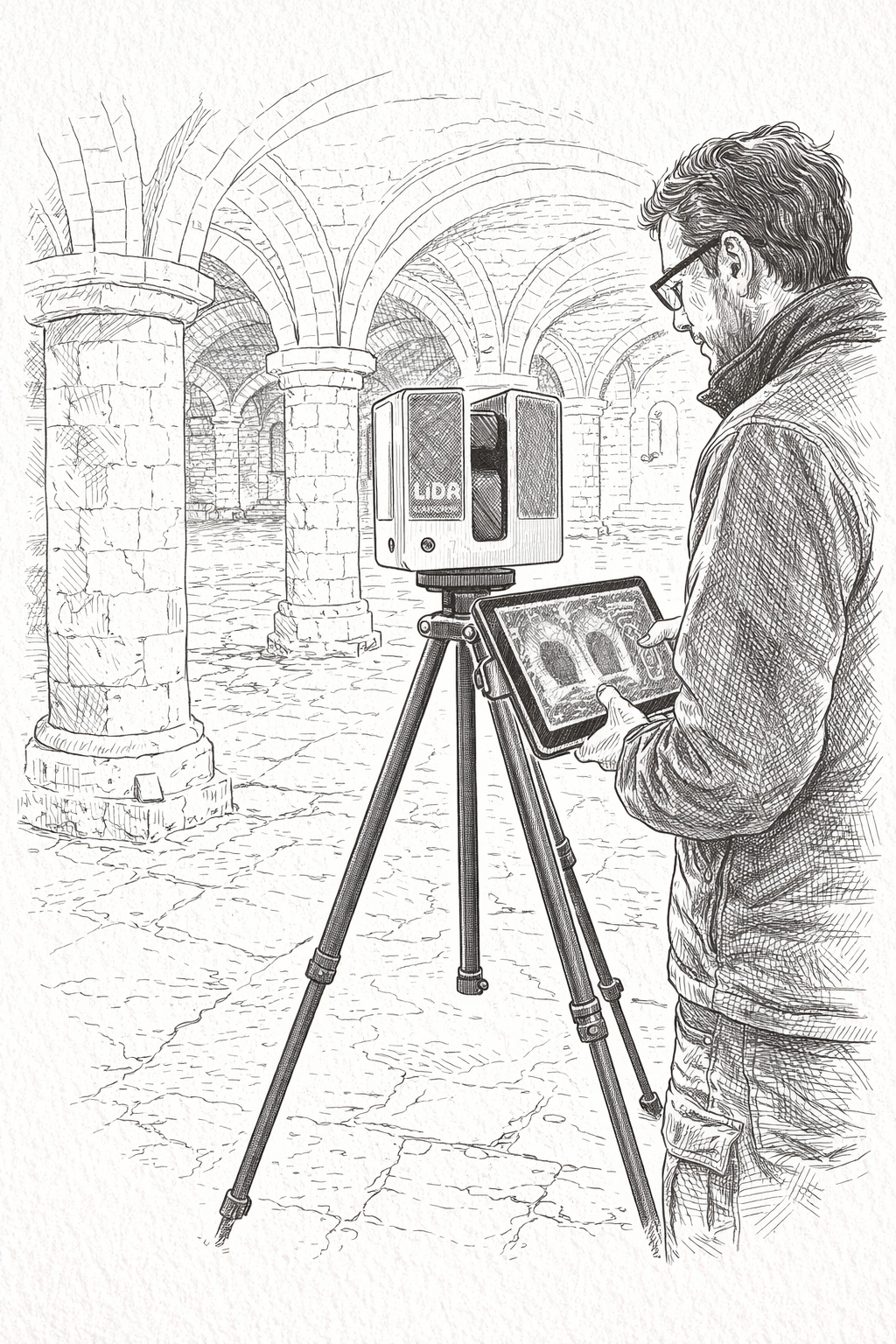
So when my protagonist, structural engineer Olivia Hart, uses laser scanning and ground-penetrating radar to find sealed 8x8x8-foot chambers in Wren's churches, she's using the exact technology that's making real discoveries today.
Why Wren Had the Perfect Opportunity
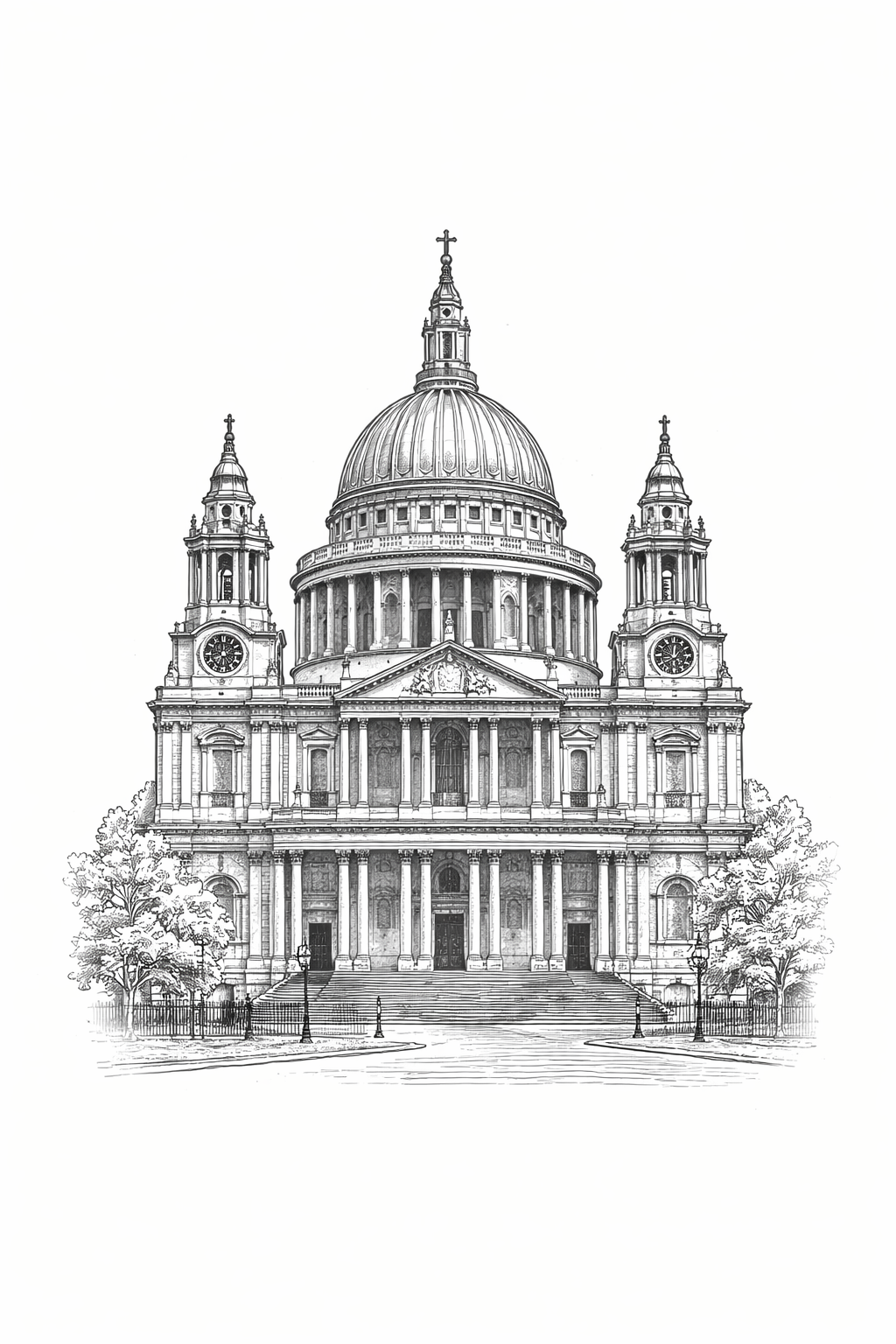
Sir Christopher Wren rebuilt 51 churches after the Great Fire of 1666, plus St. Paul's Cathedral. The project spanned forty years, giving him unprecedented control over London's reconstruction.
As Royal Surveyor, Wren answered only to the King. He personally designed each church, supervised construction, and worked with a small team of trusted craftsmen. If anyone could encode secrets into London's architecture, it was him.
The crucial phase would have been the foundation work—below ground, before above-ground construction began. Once a church was built over sealed chambers, they'd be invisible without modern scanning technology.
And here's the key: Wren couldn't have predicted radar or lasers.
In the 1670s, "sealed in a three-foot foundation wall" meant "hidden forever." He had no way to anticipate electromagnetic radiation, ground-penetrating radar, or laser scanning. These technologies emerged three centuries later.
So if Wren wanted to preserve evidence for future generations, hiding it in precisely positioned foundation chambers makes perfect sense. He future-proofed his evidence through geometry and mathematical precision, not by predicting specific technology.
The Technology That Changes Everything
Ground-penetrating radar became mainstream in archaeology during the 1990s. High-precision laser scanning emerged in the 2000s. Both technologies can now reveal what's hidden inside walls without invasive drilling.
GPR works by sending electromagnetic pulses into the ground and measuring reflections from different materials. Stone, brick, air, and soil all reflect differently. A sealed chamber shows up as a distinct void pattern.
Laser scanning creates three-dimensional point clouds of structures with millimetre-level precision. Combined with GPR, structural engineers can map hidden spaces that would have been undetectable even thirty years ago.
These aren't exotic technologies. They're standard tools in historic preservation. Every major heritage project uses them.
The question isn't whether chambers could be found—it's whether anyone had reason to look.
Why They Could Stay Hidden Until Now
Wren's churches are Grade I listed buildings, protected by law. You can't simply drill into their foundations on a whim. Comprehensive GPR surveys cost £5,000-20,000 per building and require permits, academic justification, and heritage approval.
Without a specific hypothesis, why would anyone scan?
The churches are structurally sound—Wren built brilliantly. There's no maintenance crisis driving foundation investigation. Victorian restorers focused on visible architecture, not hidden voids. World War II bombing damaged many churches, but Wren's massive foundation walls survived. Post-war rebuilding concentrated on above-ground structures.
In The Monument, it takes Thomas Hart—a historian studying property acquisitions after the Great Fire—to notice a pattern. He correlates burn zones, property transfers, and church locations, then hypothesizes that Wren might have documented the conspiracy architecturally.
Only with that hypothesis does GPR scanning make sense. Only with that research question does heritage approval become possible.
This mirrors real archaeological discoveries: someone develops a hypothesis based on archival research, technology confirms it. The Dead Sea Scrolls weren't found by accident—Bedouin shepherds were exploring caves they suspected might contain something valuable.
Historical Precedent for Secret Chambers
Wren wasn't the first builder to hide things in architecture:
Priest holes: During the English Reformation, Catholic families built hidden chambers in their homes to conceal priests during raids. Many remained undiscovered for centuries. Some are still being found.
Rosslyn Chapel, Scotland: In the 2000s, GPR revealed sealed vaults beneath the chapel floor that had been speculation for generations. They contained buried knights from the 1400s.
Westminster Abbey: Forgotten burial chambers and sealed passages are still being discovered during maintenance work.
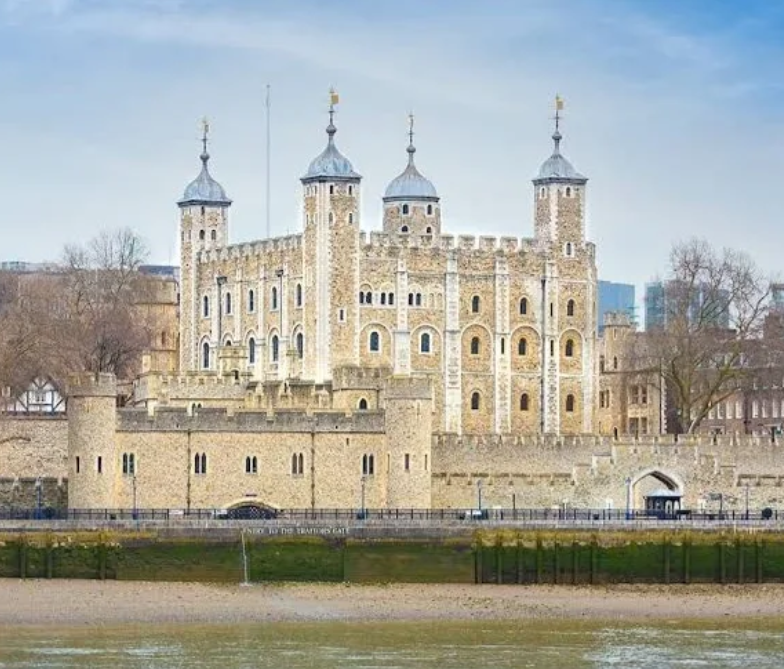
The Tower of London: A sealed medieval chamber was found during 2012 renovations. It appeared on no existing plans.
The idea of builders deliberately creating hidden spaces—and those spaces remaining hidden for centuries—isn't just plausible. It's historical fact.
Why This Makes The Monument Work
In my novel, Wren creates a pattern. Fifteen churches, each with an 8x8x8-foot sealed chamber, positioned with mathematical precision at property boundaries established after the Fire. The pattern is what makes it undeniable—one chamber could be architectural quirk, fifteen identical chambers prove intent.
This is how archaeology actually works. Patterns reveal meaning. Mathematical precision proves deliberation.
When Olivia Hart maps these chambers and finds they align astronomically, mark property boundaries, and encode Wren's geometric genius, she's discovered something that could only be deliberate. The conspiracy isn't hidden in one location—it's encoded across London's architecture like a three-dimensional map.
The technology to read that map didn't exist in Wren's time. But his pattern was built to be undeniable once that technology emerged.
The Fiction Rooted in Fact
The Monument is a thriller, not a history book. I've taken creative license with characters, conspiracy, and evidence. But the foundation—literally—is plausible.
Could Wren have hidden chambers in his churches? Yes, absolutely.
Could they stay hidden until someone with modern technology and the right hypothesis found them? Yes, this happens regularly.
Could he have encoded evidence in geometric patterns that prove deliberate design? Yes, this is exactly how Wren thought.
The real question isn't whether it's possible.
The question is: what if someone actually looked?
0 Comments