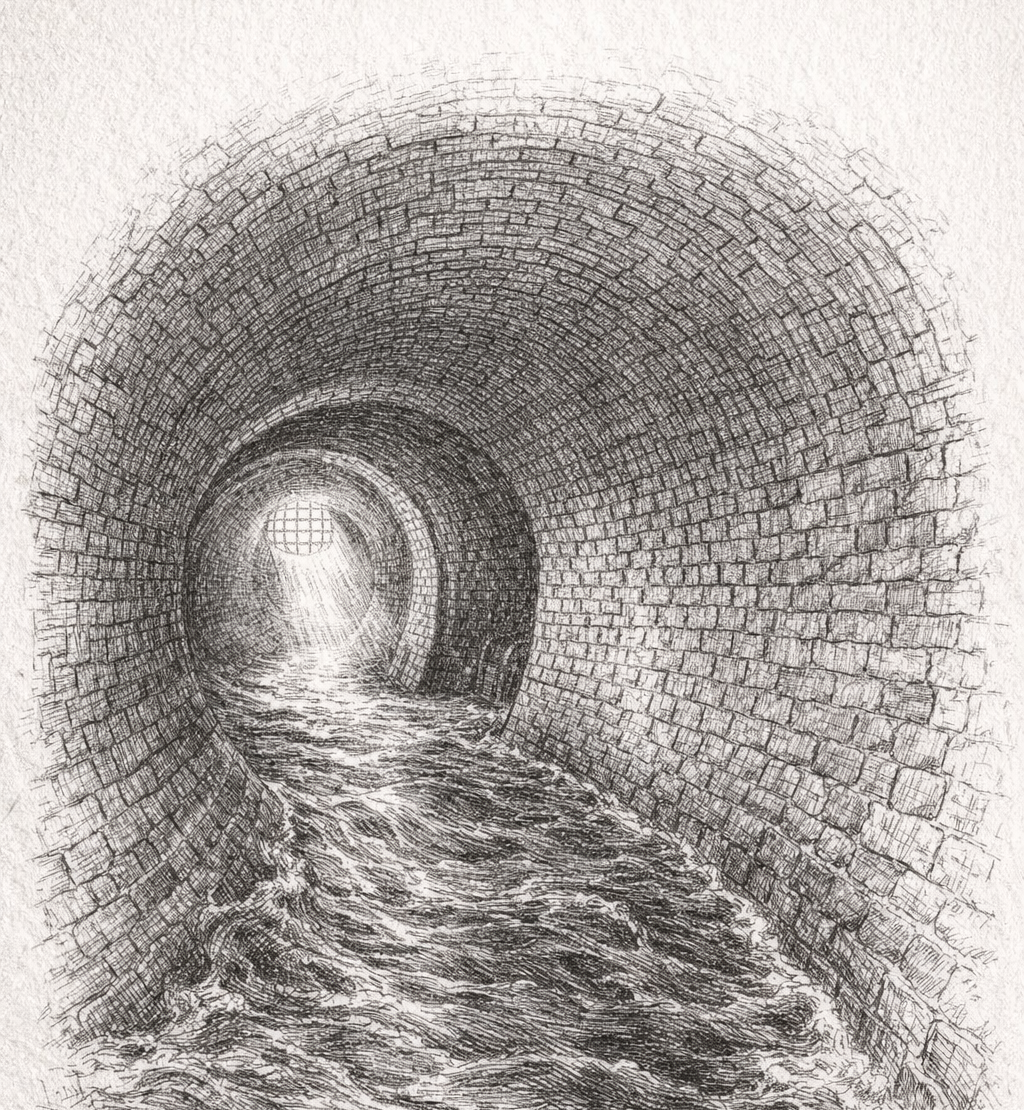
Stand on Fleet Street and you’re walking over a river. Forty feet below, the River Fleet still flows in a Victorian brick tunnel. It’s one of at least 21 buried rivers beneath London—along with abandoned Tube stations, Roman foundations, and medieval crypts. London never throws anything away. It just buries it and builds on top. And sometimes, that hidden infrastructure becomes the only escape route.
Jon Moss
Posts by Jon
read more
Wren’s Mathematical Genius: How Architecture Becomes a Code
Christopher Wren wasn’t primarily an architect—he was a mathematician and astronomer. When he rebuilt London after the Great Fire, he encoded astronomical alignments, geometric ratios, and mathematical principles into his churches. His genius: he built a hidden structural cone inside St. Paul’s dome that’s invisible but essential. Could he have hidden something more deliberate?
The Real Great Fire of London: Could There Have Been Three Ignition Points?
Every British schoolchild learns the Great Fire started in one bakery. But even in 1666, Londoners didn’t believe it. Samuel Pepys wrote about “fire taking hold in several places.” Robert Hooke noted “flame appearing in diverse quarters near simultaneously.” Could there have been multiple ignition points? The historical evidence is surprisingly uncertain.


